
COPD Home Care in Ontario

Chronic obstructive pulmonary disease makes ordinary tasks feel impossible. Showering, cooking, carrying groceries — each one costs breath that COPD patients can't spare. Aviora Healthcare provides personal support, medication reminders, and energy-conservation-based daily care for COPD clients across Ontario. Same primary caregiver. Starts within 24–48 hours. No referral required.

Serving families searching for COPD home care across Ontario including Toronto, Hamilton, Kitchener, and Ottawa.

Currently accepting new clients • Starts in 24–48 hours • Same primary caregiver

At a Glance

  • COPD affects approximately 1 in 8 Canadians over age 40 — including emphysema and chronic bronchitis
  • Personal support, medication reminders, and oxygen safety monitoring delivered by a same primary caregiver
  • Energy conservation principles built into every visit — seated activities, pacing, breathing-paced approach
  • Care starts within 24–48 hours — no waitlist, no physician referral
  • Funding: private pay, private insurance, Ontario Works, ODSP, Direct Funding

Understanding the diagnosis

What is COPD and how does it affect daily life?

Chronic obstructive pulmonary disease (COPD) is an umbrella term for progressive airflow limitation in the lungs, most commonly encompassing emphysema and chronic bronchitis. In emphysema, the air sacs in the lungs are gradually destroyed, reducing the surface area available for oxygen exchange. In chronic bronchitis, the airways are persistently inflamed and narrowed, producing excess mucus that makes breathing difficult. Many people with COPD have elements of both.

COPD is among the most common chronic conditions in Canada. Approximately one in eight Canadians over the age of 40 lives with some degree of COPD, and a significant proportion remain undiagnosed until the disease has progressed substantially. The condition is progressive: it does not reverse, and without careful management, lung function declines over time.

The most immediate challenge of COPD is breathlessness on exertion. Activities most people do without a second thought — walking from the bedroom to the bathroom, making a cup of tea, hanging laundry — can trigger severe breathlessness in someone with moderate to advanced COPD. Morning is often the hardest time: airways that have narrowed overnight open slowly, making the first hours of the day exhausting. Chronic fatigue compounds the breathlessness, and frequent exacerbations (acute worsening episodes) can require hospitalization, further weakening the lungs each time.

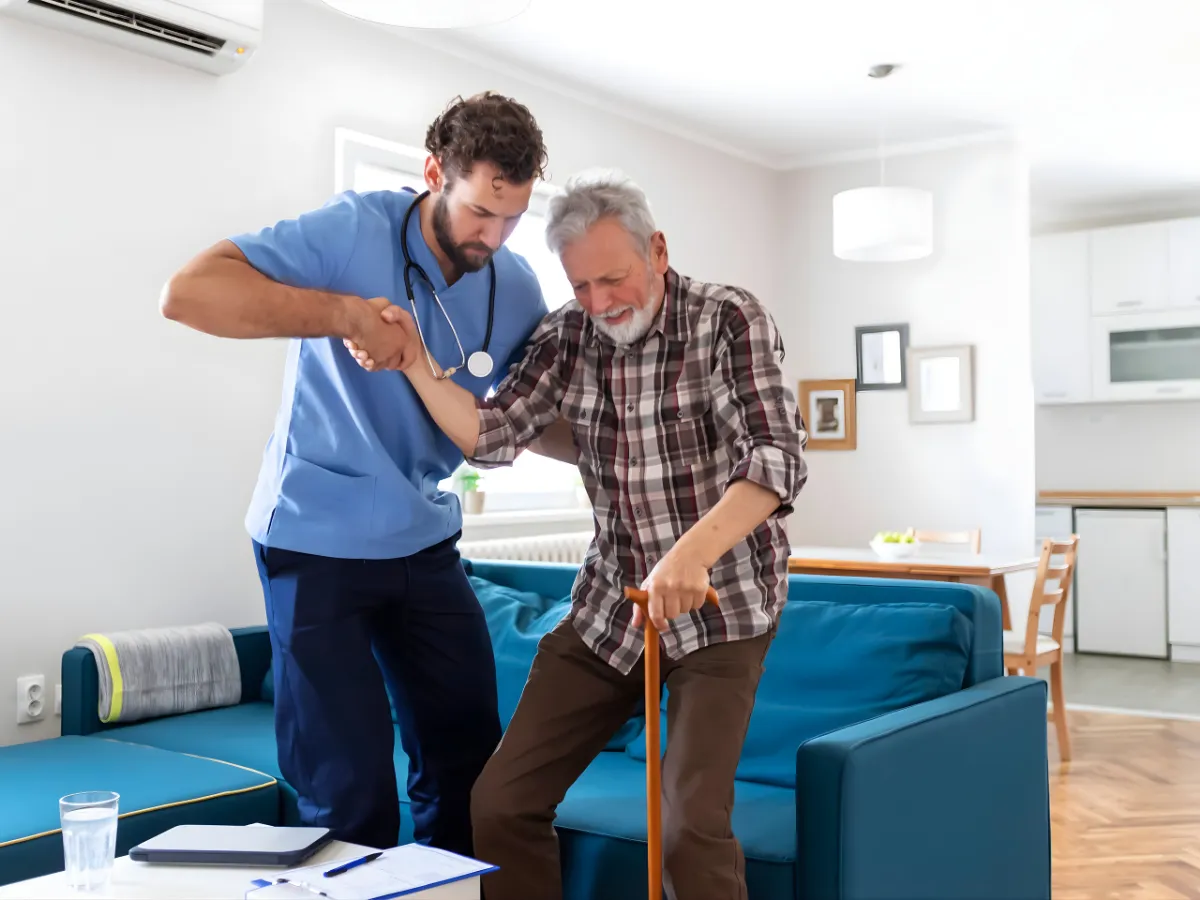
Caregiver supporting a COPD client at home in Ontario

The COPD daily burden

Why COPD makes everyday tasks so difficult

The gap between how COPD looks on paper and how it feels to live with is enormous. Clinicians describe severity in terms of FEV1 values and GOLD stages. Patients describe it as the feeling of breathing through a wet blanket — and that's on a good day.

Consider a typical morning routine for someone with moderate to severe COPD. Getting out of bed requires sitting on the edge for several minutes to let breathing stabilize before standing. Walking to the bathroom takes deliberate, slow steps. Showering — the combination of steam, exertion, and raised arms to wash hair — can leave someone gasping and needing to sit on a shower seat for ten minutes to recover. Getting dressed while breathless, managing buttons or zippers, bending to put on socks — each step depletes a limited oxygen reserve.

By the time a COPD patient has showered and dressed, they may be too exhausted to prepare breakfast. Cooking itself presents added challenges: steam from boiling water and fumes from cooking oils can irritate airways. Vacuuming and dusting stir up airborne particles that trigger coughing and exacerbation. The home that should feel like a refuge can become a minefield of respiratory triggers.

Beyond the physical burden, COPD carries a significant psychological weight. Breathlessness triggers anxiety — and anxiety worsens breathlessness. This feedback loop can cause people to avoid activities out of fear, leading to deconditioning that makes COPD harder to manage over time. Social isolation compounds the problem. When leaving the house feels like too much effort, connection with the outside world narrows, and depression is common.

Energy conservation principles

How caregivers apply energy conservation in COPD home care

Energy conservation is the foundation of effective COPD home support. The goal is to reduce the oxygen cost of daily activities so that the COPD client can maintain function, comfort, and quality of life without pushing into breathlessness.

Pacing

Breaking tasks into smaller steps with rest periods between them. Instead of showering and then getting dressed in one continuous sequence, the caregiver guides the process with deliberate pauses: sit after washing, rest before dressing, take time between each item of clothing. Rushing is the enemy of energy conservation.

Seated activities

Standing requires more oxygen than sitting. Wherever possible, caregivers support activities from a seated position: showering on a bath bench, meal prep from a chair at the counter, grooming seated at a vanity. This single adjustment dramatically reduces the breathlessness associated with morning routines.

Caregiver takes the high-cost tasks

Vacuuming, scrubbing, carrying heavy items, and anything requiring sustained exertion is handled by the caregiver. The COPD client does not need to sacrifice energy on housekeeping. That energy is preserved for social engagement, gentle mobility, and recovery.

Oxygen safety

Clients on supplemental oxygen require specific safety awareness. Caregivers are briefed on safe oxygen use: no smoking or open flames near oxygen equipment, proper tank storage, recognizing when equipment appears to be malfunctioning, and the correct flow settings per the care plan.

What the caregiver does

What a COPD caregiver does at home — task by task

Personal care — breathing-paced approach

Bathing and dressing are managed using a seated shower bench, breathing pauses between each step, and an unhurried pace. The caregiver handles hair washing, drying, and any physical component the client finds breathless-inducing, without rushing.

Meal preparation

Cooking fumes, steam, and smoke are common COPD triggers. The caregiver prepares meals so the client does not need to stand over a stove. Meals are timed to avoid exertion immediately after eating, which can worsen breathlessness.

Light housekeeping

Dusting, vacuuming, and mopping remove the allergens and airborne particles that trigger coughing and exacerbations. The caregiver handles all cleaning tasks using products safe for respiratory conditions — avoiding harsh chemical sprays.

Medication reminders

Inhalers, nebulizer treatments, oral steroids during exacerbation courses, and antibiotics all require precise timing. The caregiver ensures each medication is taken on schedule and reminds the client of proper inhaler technique if trained to do so.

Oxygen equipment monitoring

The caregiver monitors the client's oxygen setup for correct flow rate use, reminds about oxygen safety rules (no smoking, no open flame), and flags any equipment concerns to the family so the respiratory equipment supplier can be contacted.

Transportation

Getting to pulmonologist appointments, respiratory therapy sessions, and diagnostic tests is often difficult without support. The caregiver provides or arranges transportation, accompanies the client, and helps communicate with clinical staff.

Exacerbation recognition

The caregiver is briefed on warning signs specific to that client: changes in sputum colour or volume, increased breathlessness beyond baseline, new confusion or cyanosis. They know when to call the family, when to call the family nurse, and when to call 911.

Companionship and anxiety support

Breathlessness causes anxiety, and anxiety worsens breathlessness. A calm, familiar presence breaks this cycle. The caregiver provides steady companionship, reassurance during difficult breathing episodes, and reduces the isolation that worsens COPD outcomes.

Grocery runs and errands

Grocery shopping and running errands are physically demanding for COPD clients. The caregiver handles these tasks, using a shopping list developed with the client to ensure meals align with dietary needs and preferences.

When to start

When is COPD home care needed in Ontario?

Home care for COPD is most commonly initiated at one of three points. The first is after a hospitalization for an acute exacerbation. The period immediately following discharge is high-risk — lungs are weakened, energy is low, and the risk of readmission is elevated. Starting home care on the day of discharge bridges the gap between the hospital and recovery.

The second trigger is when breathlessness starts limiting activities of daily living. When showering, cooking, or making a bed reliably causes distress, the person can no longer safely manage these tasks alone. Home care steps in before safety becomes the issue.

The third is family caregiver exhaustion. Partners and adult children often absorb significant COPD support — cooking, cleaning, driving, managing medications — until they can no longer sustain it. Professional home care provides consistent, reliable support that removes that burden from family members who also need to look after their own health.

  • Breathlessness limiting showering, cooking, or dressing
  • Recent hospitalization for COPD exacerbation
  • Family caregiver approaching burnout
  • Client on supplemental oxygen needing daily oversight
  • Progressive decline in energy and functional independence
Home caregiver supporting a senior with COPD in Ontario

Aviora’s approach

How Aviora Healthcare supports COPD clients at home

Aviora assigns a same primary caregiver to each COPD client. This is not a staffing convenience — it is a clinical advantage. A caregiver who visits the same person daily learns that client's individual baseline: how breathless they typically are at rest, which household tasks cause the most difficulty, how their oxygen setup works, and what an early exacerbation looks like for that specific person. This knowledge is irreplaceable, and it cannot be replicated by a rotating roster of unfamiliar caregivers.

Caregiver briefed before first visit

Before the primary caregiver's first shift, they are briefed on the client's COPD severity and baseline, oxygen equipment setup and safety rules, current medication schedule, exacerbation warning signs specific to this client, and the emergency protocol — when to call the family, when to call a nurse, when to call 911.

No referral required — starts within 24–48 hours

Families do not need a physician referral or a formal assessment from Ontario Health atHome to start care with Aviora. A care coordinator consultation is all that is needed. Care typically begins within 24–48 hours of that first conversation.

Funding options

Aviora COPD home care is funded privately. Accepted funding sources include personal pay, private health insurance, Ontario Works, ODSP, and Direct Funding for eligible clients. A care coordinator can help identify which funding sources apply to your family's situation.

Coordinated with your health team

Aviora caregivers do not replace pulmonologists, respiratory therapists, or family physicians — they support the care plan those professionals set. Families can share the caregiver's daily observations with the health team to improve clinical decision-making between appointments.

Straight answers

Questions families ask about COPD home care in Ontario

What home care support is available for COPD patients in Ontario?

In Ontario, private home care for COPD includes personal support (bathing, dressing, grooming with breathlessness management), meal preparation, light housekeeping to reduce allergen exposure, medication reminders for inhalers and nebulizers, oxygen equipment monitoring, and transportation to pulmonologist and respiratory therapy appointments. Aviora Healthcare provides all of these services with a same primary caregiver who learns each client's triggers, baseline, and oxygen setup. Care starts within 24–48 hours with no referral required. Call (437) 446-7752.

Can a PSW help someone with COPD manage daily tasks at home?

Yes. A personal support worker (PSW) trained in COPD care can assist with the daily tasks that cause breathlessness — showering, dressing, cooking, and housekeeping — using energy conservation principles such as pacing, seated activity positions, and breathing-paced approaches. The caregiver does the physically demanding work so the COPD client conserves energy for the parts of the day that matter most. Aviora's caregivers are briefed on each client's oxygen setup, exacerbation warning signs, and emergency protocol before their first visit.

How does home care reduce COPD exacerbations?

Home care reduces COPD exacerbations by removing triggers from the home environment (a caregiver handles all dusting, vacuuming, and cleaning), ensuring medications are taken on schedule, avoiding cooking-fume exposure, and recognizing early warning signs before symptoms escalate to a crisis requiring hospitalization. A consistent caregiver who knows the client's baseline is far more likely to catch early changes than a family member managing many responsibilities at once.

When should someone with COPD start home care in Ontario?

Home care is worth considering when breathlessness is limiting activities of daily living — showering, cooking, or making a bed. The most common starting points are after a hospital admission for an acute exacerbation, when the family caregiver is approaching burnout, or when COPD has progressed to the point where the person cannot safely manage alone. Starting home care before a crisis is always preferable to starting after one. Aviora can begin care within 24–48 hours with no physician referral required.

Does OHIP cover home care for COPD in Ontario?

OHIP does not directly fund private home care for COPD. Publicly funded home care through Ontario Health atHome is available for eligible clients but involves assessments, waitlists, and no guarantee of a consistent caregiver. Aviora Healthcare is a private home care provider funded through personal pay, private insurance, Ontario Works, ODSP, or Direct Funding for eligible clients. Many private health insurance plans cover personal support services — check your policy's home care or PSW benefit.

How does Aviora Healthcare support COPD clients at home?

Aviora assigns a same primary caregiver who learns the COPD client's individual trigger patterns, baseline breathlessness level, oxygen equipment setup, and medication schedule before their first visit. Care starts within 24–48 hours of a consultation — no physician referral required. The caregiver is briefed on oxygen safety, exacerbation warning signs, and the emergency escalation protocol. Call (437) 446-7752 or contact us online.

Is COPD home care covered by private insurance in Ontario?

Many private health insurance plans in Ontario include home care or personal support benefits that cover PSW services for conditions like COPD. Coverage varies by policy — some plans cover a fixed number of hours per year, others reimburse a percentage up to a maximum. Aviora Healthcare can provide receipts and documentation to support insurance claims. Contact your plan administrator to confirm your home care benefit before booking.

Related services

Other services families consider alongside COPD home care

Personal Support & PSW Services

Scheduled daily personal support visits for bathing, dressing, meals, and medication reminders — the core of COPD home care at Aviora.

Hospital-to-Home Care

Starting care on the day of discharge after a COPD exacerbation hospitalization — the highest-risk period for readmission.

Free Care Consultation

A no-pressure conversation with an Aviora care coordinator to assess what level of COPD home support is right for your family's situation.

Ready to arrange COPD home care in Ontario?

Book a free consultation — (437) 446-7752 or contact us online. A care coordinator will walk through your family member's COPD situation and confirm what support is available, starting within 24–48 hours.

Currently accepting new clients • Starts in 24–48 hours • Same primary caregiver

Written by the Director, Aviora Healthcare. Aviora Healthcare Inc. was founded in 2024 and is headquartered in Kitchener, Ontario. All content reflects direct operational experience delivering private home care across Ontario. Content is reviewed under Ontario jurisdiction and PHIPA compliance. Aviora is a private home care provider — not affiliated with Ontario Health atHome or any publicly funded program. For medical advice about COPD management, consult your pulmonologist or family physician.